

Living in Malaysia: visas, cost of living and cities (2026)
The complete guide: the DE Rantau nomad visa, why foreign income is tax-exempt, what it costs to live in Kuala Lumpur, where to live and a step-by-step for your first 30 days.
It’s six in the evening in Kuala Lumpur. From the 30th floor of an apartment that costs less than a one-bed back home, the Petronas Towers light up against the purple sky. Down below, a mamak serves roti canai for a dollar and the café next door’s wi-fi pushes a 4K upload without blinking. Welcome to Asia’s worst-kept secret.
Malaysia puts together three things that rarely come together: first-world infrastructure, Southeast Asian costs, and English everywhere. And for remote workers, a game-changing bonus, the income you earn from abroad isn’t taxed here.
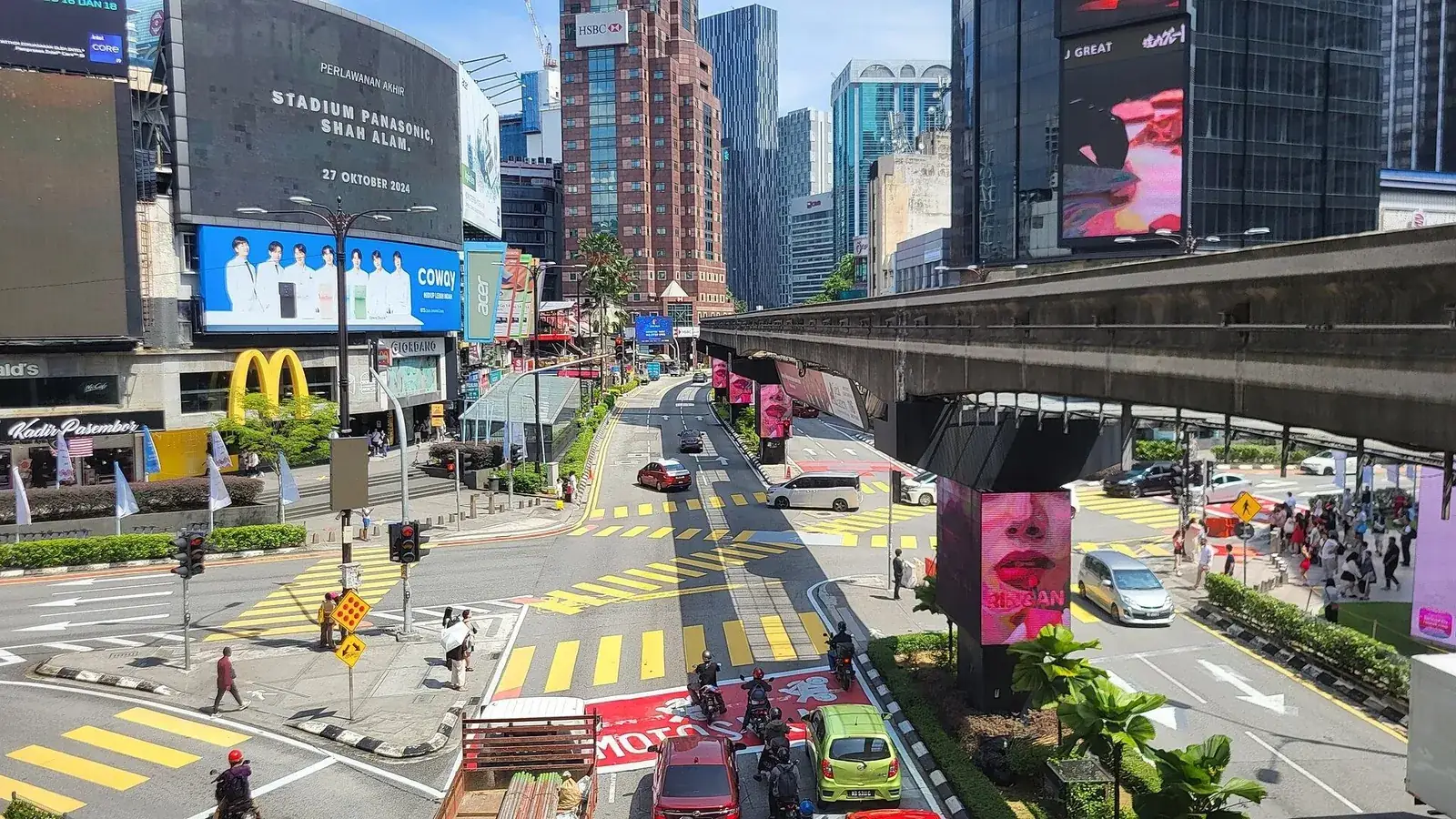
Kuala Lumpur is a modern metropolis at small-town Asian prices, skyscrapers, a metro, top hospitals and some of the best food on the planet, for a fraction of Western costs.
Why Malaysia
- English in practice: spoken in shops, hospitals, government. It removes the biggest adjustment barrier.
- Foreign income exempt: what you earn abroad, working remotely, pays no tax in Malaysia.
- Unbeatable cost-vs-comfort: you live in a modern apartment with a pool and gym for what a studio would cost back home.
- Air hub: from KL, all of Southeast Asia is one cheap flight away.
- Barely explored: while everyone talks about Bali and Thailand, Malaysia stays underrated. An advantage for whoever gets there first.
Malaysia’s visas
There are more paths than the tourist visa, and one was tailor-made for remote workers:
| Visa | For whom | Duration | What it requires |
|---|---|---|---|
| DE Rantau (nomad) | Freelancer / remote in digital fields | 3 to 24 months, renewable | Prove income (~US$ 24k/yr) and digital/remote work |
| MM2H (second home) | Long stay, without working locally | 5 years, renewable | Fixed deposit + proven income (Sarawak is the more accessible version) |
| Employment Pass | Work with a local company | 1 to 5 years | Employer sponsorship |
| Tourism | Testing the country | 90 days (visa-free for many) | Valid passport |
The DE Rantau, run by the government’s tech agency (MDEC), is the star for remote workers. It accepts digital professionals (dev, design, marketing, content, consulting) with proven foreign income, and comes with the right to bring dependents. It’s also the same framework that accredits facilitators and partners, which opens business doors well beyond your personal visa.
Not sure which of these routes fits your profile? That’s exactly what the quiz sorts out in 2 minutes.
What it costs to live, the real budget
Malaysia delivers first-world infrastructure at Southeast Asian prices. Here’s a realistic monthly budget for one person in Kuala Lumpur, living well (not scraping by, not luxury):
| Item | Cost/month (USD) |
|---|---|
| Rent (modern studio/1-bed with pool and gym) | 450 to 700 |
| Food (mixing hawker and cooking) | 250 to 400 |
| Transport (metro + Grab) | 60 to 100 |
| Internet + phone | 25 to 40 |
| Coworking / cafés | 80 to 150 |
| Leisure, gym, extras | 200 to 350 |
| Total | ~US$ 1,100 to 1,600 |
Comparing across cities:
| City | Monthly spend | Profile |
|---|---|---|
| Kuala Lumpur | US$ 1,100 to 1,600 | Modern metropolis, everything on hand, top transport |
| Penang | US$ 900 to 1,400 | Legendary food, heritage, expat community |
| Langkawi | US$ 1,000 to 1,400 | Island, beach, duty-free |
| Kota Kinabalu | US$ 900 to 1,300 | Borneo, nature, diving |
The biggest money “leak” is living off Western restaurants and delivery. Get into the hawker rhythm (street-food courts) and you eat very well for almost nothing.
Where to live
Kuala Lumpur: the metropolis. Neighborhoods like Bukit Bintang (buzz, central), Mont Kiara (families and expats, new apartments), Bangsar (hip, cafés) and KLCC (at the foot of the Petronas). Metro, monorail, malls and international-standard hospitals. It’s the HQ for anyone wanting a big city, comfort and flight connections.
Penang (George Town): a UNESCO heritage site, the country’s food capital. Streets of colonial shophouses, street art, temples and the strongest expat community outside KL, at a far calmer pace. The darling of anyone who wants culture and low costs.
Langkawi: an archipelago in the northwest, beaches, nature and duty-free status (cheap alcohol and electronics). Good for a seaside season, island pace.
Kota Kinabalu: in Malaysian Borneo, a base for world-class diving, Southeast Asia’s highest mountain and raw nature. More isolated, cheaper, for people who want adventure.
The food, a chapter of its own
Few countries eat as well as Malaysia, and this is where the cost of living becomes pleasure. Nasi lemak (coconut rice with sambal) is the national breakfast; Penang’s char kway teow, the roti canai from the 24h mamak, the spicy laksa, the grilled satay. At the hawker courts, each stall specializes in one dish, and a full meal costs one to two dollars. Eating is cheap, safe and part of social life, it’s where you meet people.
A typical day
You wake up, head to the corner kopitiam for a kopi (strong, sweet local coffee) and kaya toast. You work the morning from a café with air conditioning and 500 Mbps fiber. For lunch, a made-to-order nasi campur and a cold orange juice. In the afternoon, a workout in the building’s gym and the pool. At night, the metro takes you to a hawker centre where friends from half a dozen countries share plates that together come to under six dollars. Simple, comfortable, cheap, and in your working language.
What no one tells you: taxes
Here Malaysia shines. A visa doesn’t define the tax, but Malaysia’s regime is one of the friendliest in the world for people who earn from abroad.
- You become a tax resident after spending 182 days or more in the country in the year.
- The big advantage: Malaysia doesn’t tax foreign-source income for individuals (the exemption is extended by law to 2036). What you earn abroad, working remotely, pays no tax in Malaysia.
- Only income generated inside Malaysia is taxed.
And on the home side: until you file your formal tax exit, your home country still considers you a tax resident, and your income can be taxed there even while you live in KL.
Getting there
There’s no direct flight to Malaysia from the Americas. You connect through a big hub into Kuala Lumpur (KUL):
- Via Doha (Qatar Airways) or Dubai (Emirates): the most direct, most frequent routes.
- Via Istanbul (Turkish Airlines): often brings good fares.
- From KL, dirt-cheap flights (AirAsia) link to Penang, Langkawi, Borneo and all of Southeast Asia.
First 30 days, the arrival plan
- Before you fly: eSIM (Airalo) active, nomad insurance sorted, first nights booked.
- Week 1: see 2 to 3 neighborhoods in person, test the metro and Grab, map the hawker centres near you.
- Week 2: lock in the monthly rental, buy a local SIM (Maxis/Celcom), pick 1 to 2 work cafés/coworkings.
- Weeks 3 to 4: routine in place, gym, market, a social circle at the hawker. If you’re on DE Rantau, organize the paperwork with your facilitator.
The practical stuff from people who went
- Language: English handles almost everything; it’s Malaysia’s biggest practical advantage.
- Health: international-standard hospitals at prices far below Western ones (Malaysia is a medical-tourism destination). Nomad insurance covers daily life.
- Transport: KL has a metro and monorail; Grab covers the rest, cheaply. No car needed.
- Money: an international card with a good exchange rate at first; a local account with a long-stay visa.
- Internet: some of the best value in the region; fast, cheap fiber in any apartment.
Culture and etiquette in 30 seconds
Malaysia is multicultural, Malays, Chinese and Indians live side by side, and majority Muslim. Dress modestly (shoulders and knees covered), especially at mosques and during Ramadan; use your right hand to eat and greet; take your shoes off entering homes and temples. It’s a tolerant, welcoming society, and the diversity shows up in some of the best food in the world.
Pros and cons, unfiltered
For: English everywhere · foreign income exempt · unbeatable cost-vs-comfort · first-world healthcare · excellent, cheap food · air hub · safety.
Against: hot, humid climate year-round · KL leans on malls and air conditioning (less “street life”) · long-stay visa bureaucracy can be slow · alcohol is expensive (Muslim country) · less “exotic/tropical” than Bali or the Thai islands.
Is it worth it?
For anyone who works remotely, wants first-world comfort, speaks only English and doesn’t want to pay tax on foreign income, Malaysia is hard to beat, and still barely explored, which makes it a smart bet. The usual rule: pick the right city, enter through the visa route that serves you, and settle the tax question before you fly.
City guides: get to know Kuala Lumpur and Penang from the inside, neighborhoods, what to do, food and where to stay.
Ready for the next step? The Rota Ásia quiz matches your profile, budget and lifestyle and hands you a tailored plan: your city, the ideal visa route, the cost and the taxes, straight to your inbox.
Frequently asked questions
Does Malaysia tax the income I earn from abroad?
No. Malaysia doesn’t tax individuals’ foreign-source income (the exemption is extended by law to 2036). Only income generated inside the country is taxed, one of the friendliest regimes in the world for people earning from abroad.
What is the DE Rantau visa?
It’s Malaysia’s digital-nomad visa, run by the government’s tech agency (MDEC). It lasts 3 to 24 months, accepts digital professionals and asks for proven income of about US$ 24k/yr, well below the regional average.
Do I need to speak Malay to live in Malaysia?
No. English is spoken in shops, hospitals and government, it’s the country’s biggest practical advantage and removes the main adjustment barrier.
How much does it cost to live in Kuala Lumpur?
You live very well on US$ 1,100 to 1,600 a month: a modern apartment with a pool costs US$ 450-700, and eating at the hawker centres costs a couple of dollars.
Essential tools for the move
This page contains affiliate links: you pay nothing extra and you help keep Rota Ásia running.
- InsuranceSafetyWingHealth insurance for nomads, covers you across several countries at once.See insurance ↗
- eSIM / dataAiraloA digital eSIM so you have internet the moment the plane lands.Get an eSIM ↗
- ToursGetYourGuideTours, day trips and experiences at your destination.See tours ↗
- MoneyWiseMulti-currency account and fair exchange to get paid from abroad and spend at your destination.Discover Wise ↗
- StaysAgodaAsia’s giant for accommodation, usually the best prices in the region.See on Agoda ↗
- StaysBooking.comBook your first days before locking in a monthly rental on the ground.Find a place to stay ↗
Find your city in Asia
Stop guessing. Answer for 2 minutes and get a plan with your city, visa route, cost and taxes, straight to your inbox.
Start now →