
Busan
Korea's seaside city: urban beaches, colorful mountainsides, the country's biggest fish market, and a lighter, cheaper pace than Seoul, with a much milder winter.
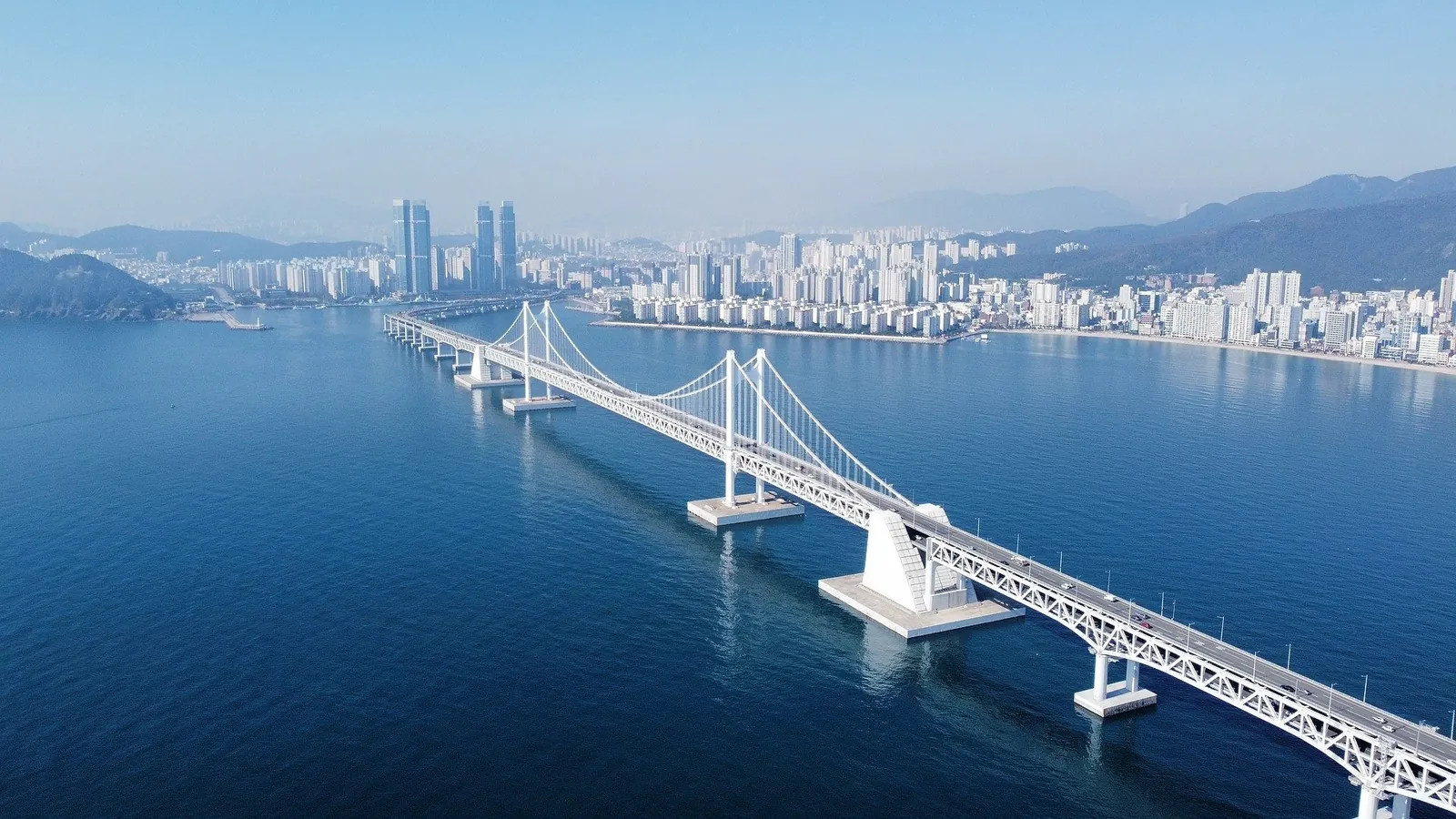
Let me drop you into the middle of Busan. You wake up on an urban beach with skyscrapers behind the sand, have coffee on a Gwangalli rooftop looking at the giant bridge, and at lunch dive into Korea’s biggest fish market, where the catch is still thrashing in the tanks. In the afternoon, you climb the colorful hillside houses of Gamcheon, and at dusk head back to the beach with a beer. Busan is Korea with its feet in the sand: it has all of Seoul’s efficiency and technology, but with sea, mountains, a lighter pace, and a friendlier cost of living. It’s the country’s second city and, for many, the nicest to live in.
Busan in 30 seconds
It’s the largest coastal city in South Korea, wedged between the sea and mountains. It’s a major port and film hub (host of a famous festival), with urban beaches, huge markets, and lively nightlife. It has the same flawless transport, the same ultra-fast internet, and the same top-tier healthcare as Seoul, but with a more relaxed vibe, cheaper rent, and a winter far milder than the capital’s.
Where to live, a tour of the neighborhoods
Haeundae: the most famous beach and the most modern, cosmopolitan area, with skyscrapers, hotels, and the biggest international community. Convenient and seaside.
Gwangalli: the neighboring beach, hipper and younger, with the iconic view of the lit-up Gwangan Bridge, cafes, and bars. A nomad favorite.
Seomyeon: the city’s commercial, nervous center, with shopping, restaurants, and the crossing of the metro lines. Central and convenient.
Nampo / Jung-gu: the old heart, near Jagalchi market and the historic streets. More traditional and full of life.
The must-dos, what to do
- Haeundae and Gwangalli beaches: the city’s leisure heart; sand, cafes, and the lit-up bridge at night.
- Gamcheon Culture Village: the hillside of colorful little houses, a maze of art, murals, and photogenic alleys.
- Jagalchi fish market: Korea’s largest; pick your catch and eat it super fresh right there.
- Haedong Yonggungsa Temple: the rare seaside Buddhist temple, beautiful at sunrise.
- Igidae coastal trail and the Oryukdo Skywalk: cliffs, sea, and glass walkways over the ocean.
- International Film Festival (BIFF): in October, the city becomes Asia’s film capital.
The food, sea, pork soup, and markets
Busan eats like a port town. Seafood is the star, from the sashimi (hoe) at Jagalchi to shellfish grilled by the beach. The city’s signature dish is dwaeji gukbap (rice-and-pork soup), comforting and dirt cheap; milmyeon (cold noodles) refreshes in summer; and ssiat hotteok (a sweet pancake stuffed with seeds) is the classic market street food. You eat very well for very little, especially by the sea.
A perfect day in Busan
A morning run on Gwangalli beach, coffee on a rooftop facing the bridge. A morning of work on lightning fiber. For lunch, a steaming dwaeji gukbap. In the afternoon, climb Gamcheon to get lost among the colorful houses, or do the Igidae coastal trail. At dusk, fresh sashimi at Jagalchi. At night, Haeundae beach with the city glowing and a cold beer. You take the metro home, fast, clean, calm.
What it costs and the practical stuff
You live well on US$ 1,220 to 2,080 a month, cheaper than Seoul. A furnished officetel, often with a sea view, runs US$ 600 to 1,000; eating out is affordable and transport is great and cheap. You get the same first-world infrastructure as the capital, internet, healthcare, safety, in a lighter, more coastal, more affordable package. It’s the best of both worlds.
Getting around
- Metro: clean, cheap, and signed in English; it connects beaches, downtown, and markets. Use a T-money card.
- Bus: extensive and integrated, great for the coastline.
- Taxi / Kakao T: cheap and easy via the app, handy at night.
- On foot and by bike: the beaches and seafront invite walking and cycling.
Is Busan worth living in?
If you want Korea with a beach: sea, mountains, and a lighter pace, without giving up first-world technology, healthcare, and safety, Busan is a gift. It’s cheaper, more relaxed, and has a milder winter than Seoul. Ideal for those who love the coast, want Korean efficiency in a calmer package, and don’t need the capital’s full-on buzz.
Busan is one of the cities in the South Korea guide, where you’ll find the visas, the taxes, and the other cities.
This page contains affiliate links: you pay nothing extra and you help keep Rota Ásia running.
From Brazil to Busan
From Seoul, the KTX bullet train arrives in a little over 2h and spares you another airport check-in.
Price checked on Skyscanner in August 2026, economy, return from São Paulo. Fares move with the season: use it as a starting point and confirm in the search. Compare with the other destinations.
Leaving Busan
9 destinations| Seoul | private transfer · train |
|---|---|
| Osaka | ferry |
Bangkok, Chiang Mai, Da Nang, Hanoi, Ho Chi Minh (Saigon), Kuala Lumpur, Tokyo.
Routes served by 12Go, the platform most used for buses, trains and ferries across Southeast Asia.
Once you are in Busan
For things to do, see the tours and day trips.
Finding a place in Busan
A portal is for landing with a sense of prices, not for signing a lease. A listing in English is an agent talking to a foreigner, with their commission baked in. To land knowing the range, start with Zigbang and Dabang.
Resident groups on Facebook (search the city name with "expats", "nomads" or "housing"), signs on the street, and a word with the building manager. This is the stock that never reaches a portal, and where the price gap lives.
Learn what jeonse and wolse mean before you search. The first is a huge deposit with no monthly rent, and it is what shows up in the cheapest listings, which misleads newcomers.
Do not sign a lease from abroad. Book the first weeks, walk the neighbourhoods, and only then commit. The most common scams and what to check before you sign are in Renting without getting burned.
Essential tools for the move
- InsuranceSafetyWingHealth insurance for nomads, covers you across several countries at once.See insurance ↗
- eSIM / dataAiraloA digital eSIM so you have internet the moment the plane lands.Get an eSIM ↗
- ToursGetYourGuideTours, day trips and experiences at your destination.See tours ↗
- MoneyWiseMulti-currency account and fair exchange to get paid from abroad and spend at your destination.Discover Wise ↗
Find your city in Asia
Stop guessing. Answer for 2 minutes and get a plan with your city, visa route, cost and taxes, straight to your inbox.
Start now →